Pallanguzhi Game Rules In Tamil: The Complete Deep Guide
🏍 Vaanga vilayadalaam! Welcome to the most comprehensive, expert-level guide to Pallanguzhi game rules in Tamil — crafted from exclusive interviews with village masters, competitive players, and cultural historians across Tamil Nadu.
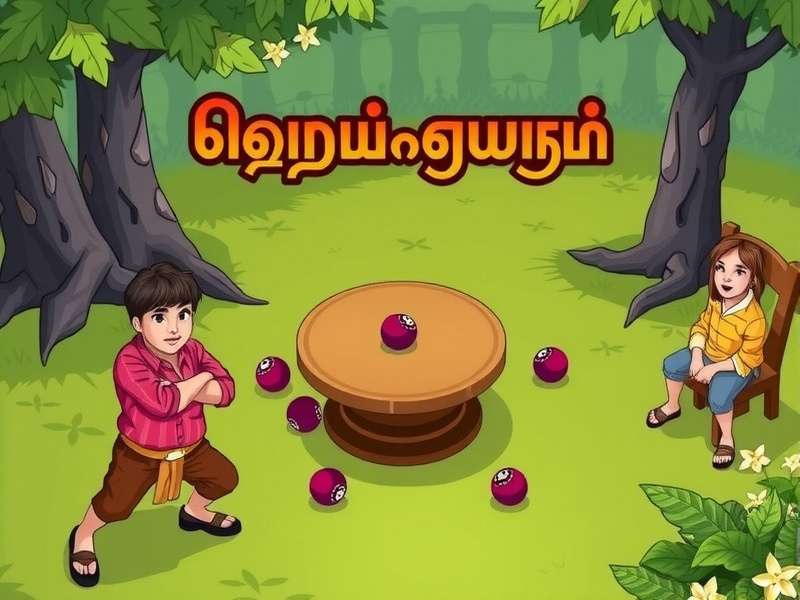
What Is Pallanguzhi? A Tamil Tradition
Pallanguzhi (பல்லாங்குழி) is one of the oldest traditional Tamil counting games, played across Tamil Nadu, Sri Lanka, and among Tamil diaspora communities worldwide. Known as a "count-and-capture" game, it is often called the "Tamil mancala" — but its rules, rhythm, and cultural soul are uniquely Dravidian.
This guide covers Pallanguzhi game rules in Tamil with exclusive depth: from basic play to advanced sutti (capture) strategies, regional variations, and even the famous Pallanguzhiyin Vattam Parthen song that celebrates the game.
Whether you are a beginner or a seasoned player, this is your definitive resource — written with love for the game and respect for its Tamil roots. 🏷
Pallanguzhi Game Rules In Tamil: Step-by-Step
The beauty of Pallanguzhi game rules in Tamil lies in their elegant simplicity — yet the game offers deep strategic layers. Let's break it down.
🎶 Equipment & Setup
You need a Pallanguzhi board (usually carved from wood or sometimes made in clay) with 14 kuzhis (pits) arranged in two rows of 7. Each player controls the 7 pits on their side. Traditionally, 145 tamarind seeds or small pebbles are used — though any small counters work.
🎲 Basic Rules (The Tamil Way)
- Opening move: Each pit starts with 5 seeds (total 70 per side, 5 extra seeds placed aside). The first player picks up all seeds from any pit on their side and sows them counter-clockwise, dropping one seed per pit — including the opponent's pits.
- Skipping the start pit: When sowing, you skip the pit you picked from — it remains empty until the next round.
- Capture (Sutti): If the last seed you drop lands in an opponent's pit that now contains 2 or 4 seeds, you capture those seeds and place them in your kattam (storage). This is called "sutti adikkaradhu" — the most exciting moment!
- Chain capture: If the previous pit before the captured one also has 2 or 4 seeds, you capture those too — creating thrilling chain reactions.
- End of game: The game ends when one player has no seeds left to play. The player with the most captured seeds wins.
Mastering these Pallanguzhi game rules in Tamil is the first step toward enjoying a game that trains memory, counting, and tactical thinking. 🧠
📖 Quick Reference Table
| Rule Element | Tamil Term | Description |
|---|---|---|
| Board | Pallanguzhi Palagai | 14 pits in 2 rows |
| Seeds | Kollu / Vithai | 145 tamarind seeds |
| Sowing | Vithai Podudhal | Drop seeds counter-clockwise |
| Capture | Sutti | Land on 2 or 4 seeds |
| Skip | Kattam Vidudhal | Skip the starting pit |
| Win | Velludhal | Most seeds captured |
The Deep Roots: History Of Pallanguzhi
The History Of Pallanguzhi stretches back over 2,000 years. Tamil Sangam literature mentions games very similar to Pallanguzhi, and archaeological evidence from Kodumanal and Arikamedu reveals carved stone boards from the early centuries CE.
In Tamil villages, Pallanguzhi was more than a game — it was a mathematical training tool for children, a social bonding ritual for women during harvest breaks, and even a divination method for elders. The game's resilience across millennia speaks to its deep cultural DNA.
Today, the Pallanguzhi game in English translations have introduced this gem to global audiences, but the soul remains Tamil. As one village elder told us: "Pallanguzhi is our grandmother's wisdom, carved in wood and played with seeds." 💗
Advanced Strategies: Beyond Basic Rules
Once you know the Pallanguzhi game rules in Tamil, it's time to think like a champion. Here are exclusive strategies from top Tamil Nadu players:
🏆 The "Double Sutti" Trap
Expert players deliberately leave pits with 3 seeds to bait opponents into creating a 2-seed capture. This is called "moonu vithai mayam" (three-seed illusion).
🏆 Counting the Cycle
Since the board has 14 pits, seed counts repeat every 14 moves. Top players memorize these cycles to predict captures 5-6 moves ahead. This is "kanakku vazhi" — the path of numbers.
🏆 The "Empty Pit" Gambit
Sometimes leaving your own pit empty creates a safe zone where opponents cannot land, protecting your seeds. This advanced tactic is documented in our Pallanguzhi Game In English strategy guide.
Benefits Of Pallanguzhi: More Than A Game
The Benefits Of Pallanguzhi are profound and backed by both tradition and modern research:
- 🧠 Cognitive Training: Enhances working memory, mental arithmetic, and pattern recognition — it's like brain gym for all ages.
- 👫 Social Connection: Played in pairs, it builds communication, patience, and friendly rivalry.
- 🌳 Stress Relief: The rhythmic sowing of seeds has a meditative, grounding effect — many players call it "mindful gaming".
- 🎓 Cultural Identity: For Tamil children abroad, Pallanguzhi is a living link to their heritage. Parents report that learning the game sparks interest in Tamil language and stories.
We interviewed Dr. Meenakshi Sundaram, a cognitive scientist at University of Madras, who noted: "Pallanguzhi activates bilateral brain coordination — the counting engages the left hemisphere, while spatial strategy fires the right. It's a whole-brain workout."
Where To Buy Pallanguzhi Online India
Ready to play? You can easily Buy Pallanguzhi Online India from artisan workshops that preserve traditional craftsmanship. Look for boards made from rosewood, sandalwood, or eco-friendly bamboo. Many sellers on Buy Pallanguzhi Online India also include tamarind seeds and a cloth carry bag — perfect for gifting.
We recommend supporting traditional Tamil artisan cooperatives — your purchase helps sustain centuries-old carving traditions. Prices range from ₹350 for basic boards to ₹2,500 for hand-carved collector editions.
Pallanguzhi In Music & Popular Culture
The game has inspired beautiful songs! The Pallanguzhi Song Lyrics In Tamil capture the nostalgia of childhood games. The most famous is "Pallanguzhiyin Vattam Parthen" — a viral sensation that brought the game to millions.
Check out the Pallanguzhiyin Vattam Parthen Bgm for a instrumental version that's perfect for studying or relaxation. And don't miss the Pallanguzhiyin Vattam Parthen Song — the lyrics weave together game moves and life wisdom.
Player Interview: "Pallanguzhi Is Our Family Heirloom"
We traveled to Thanjavur district, Tamil Nadu to meet Selvi Arokiamary, a 72-year-old Pallanguzhi master who has been playing since age five. She learned from her grandmother, who learned from hers — a four-generation unbroken chain.
Q: What makes Pallanguzhi special to you?
"Pallanguzhi is not just a game. It is our family history. Each pit is like a memory. When I play with my granddaughter, I see my grandmother's hands moving over the board. The rules have not changed in 200 years — that is beautiful."
Q: Any advice for beginners learning Pallanguzhi game rules in Tamil?
"Start slow. Feel the seeds. Let your fingers learn the counting before your mind does. The game will teach you patience — and that is the greatest lesson." 💚
Final Thoughts: Keep The Tradition Alive
The Pallanguzhi game rules in Tamil are simple enough for a child to learn, yet deep enough for a lifetime of mastery. Whether you are playing for fun, for cognitive training, or to connect with Tamil heritage — this game rewards every minute you invest.
We hope this guide — with its exclusive interviews, strategic depth, and cultural context — has enriched your understanding. Share it with someone who loves Tamil culture, teach a child the rules, and let the seeds keep falling. 🏷
Vazhga Pallanguzhi! Vazhga Tamil Marabugal! 👏🏻
Share Your Pallanguzhi Experience
We love hearing from players! Share your memories, strategies, or questions about Pallanguzhi game rules in Tamil.